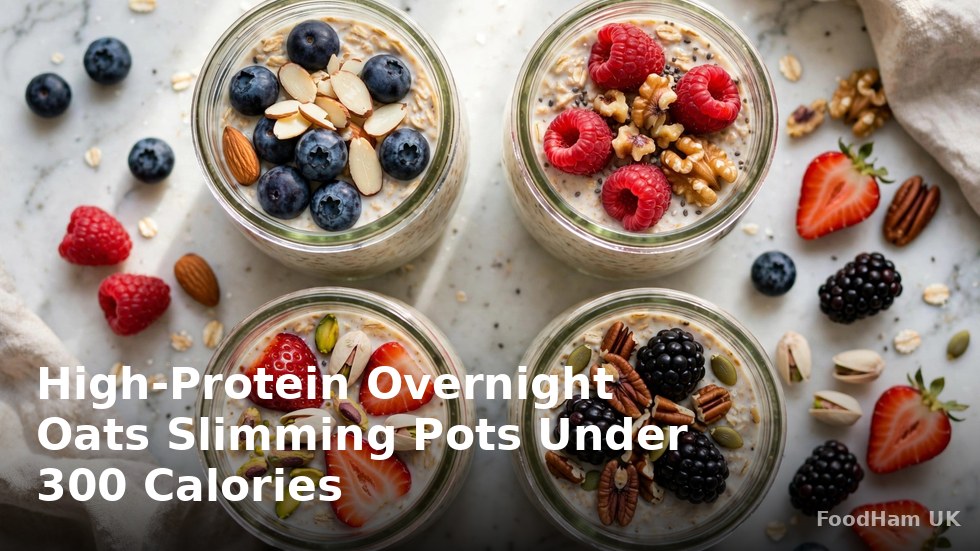
High-Protein Overnight Oats Slimming Pots Under 300 Calories
These slimming overnight oats recipes solve the hardest meal of the day for anyone watching calories: breakfast on a workday morning. Each pot is built on oats, 0% Greek yogurt and skimmed milk, lands under 300 calories, and carries 20g or more of protein — the kind of breakfast that keeps you full until lunch instead of sending you to the biscuit tin at ten. You make five in about fifteen minutes on Sunday evening, and every weekday morning becomes grab-and-go.
A quick note: FoodHam is an independent budget food blog. These are homemade slimming friendly ideas — we are not affiliated with, sponsored by, or endorsed by Slimming World, and nothing here is a diet plan. Nutrition figures are estimates to help you make informed choices.
Key Takeaways
- Each pot is under 300 calories with 20g-plus of protein, thanks to the Greek yogurt base.
- Five pots cost around £2.75 in total — about 55p each, against £2-plus for a shop-bought pot.
- Prep takes 15 minutes for the whole week; the fridge does the rest overnight.
- Pots keep 4 days in the fridge, so prep Sunday and Wednesday for full-week coverage.
- Five flavour variations below mean no two mornings have to taste the same.
Why Slimming Overnight Oats Recipes Work for Calorie-Aware Breakfasts
Overnight oats work on two levels. Physically, the oats soak up the milk and yogurt over eight hours and turn into something thick, creamy and pudding-like — no cooking, no morning effort, just a jar you open and eat. Nutritionally, the combination of oat fibre and yogurt protein is one of the most filling breakfasts you can build at this calorie level. Oats are rich in beta-glucan, a soluble fibre that forms a gel in the stomach and slows digestion; the protein from the yogurt adds a second layer of satiety. Together they explain why a 280-calorie pot of overnight oats outlasts a 280-calorie bowl of cornflakes by hours.

The protein is the part most overnight oats recipes get wrong. A standard recipe — oats, milk, a spoonful of honey, some fruit — often lands at 8 to 10g of protein, which is fine but not remarkable. Swapping half the milk for 0% Greek yogurt pushes every pot in this guide past 20g without adding meaningful calories. That is the difference between a breakfast that is merely healthy-sounding and one that actually holds you.
Then there is the money. Branded “protein” overnight oat pots in the chilled aisle cost £2 to £2.50 each for what is essentially oats, yogurt and flavouring in a fancy jar. Five homemade pots cost less than one shop-bought one. The jars themselves are a one-time purchase — any 350ml jar or tub with a lid works, and old jam jars are perfect.
The Master Base Recipe (Makes 1 Pot)
Every variation below starts from this base. Learn it once and you can improvise forever.
Ingredients
- 40g rolled oats (not instant — they go mushy; not steel-cut — they stay hard)
- 100g 0% fat Greek yogurt
- 100ml skimmed milk
- 1 tsp chia seeds (optional, adds thickness and 20 calories)
- 1 tsp honey or sweetener of choice (optional)
- Pinch of salt (sounds odd, makes the oats taste oatier)
Method
- Add everything to a 350ml jar or tub and stir thoroughly, making sure there are no dry pockets of oats at the bottom.
- Seal and refrigerate for at least 6 hours, ideally overnight.
- In the morning, stir, add your toppings, and eat cold — or microwave for 90 seconds if you prefer it warm.
That is the entire technique. The most common mistake is using too much liquid, which gives you oat soup; the ratio above — 40g oats to 200g combined yogurt and milk — sets into a thick, spoonable pot every time.
Five Flavours Under 300 Calories
Each variation adds flavour ingredients to the master base. Nutrition figures are estimates per pot including the base.
1. Classic Berry (approx. 275 kcal, 21g protein)
Stir 80g of frozen mixed berries through the base before refrigerating — they defrost overnight, bleed beautiful colour through the oats, and are far cheaper than fresh. Top with 5g of flaked almonds in the morning. Frozen berries are one of the great budget freezer staples: a 500g bag costs around £2 and covers six pots.
2. Apple & Cinnamon (approx. 265 kcal, 20g protein)
Grate half an apple (about 75g) into the base with ½ teaspoon of cinnamon and a pinch of nutmeg. The grated apple melts into the oats overnight and the whole pot tastes like apple crumble. Add a tablespoon of the yogurt on top in the morning for a fresh contrast.
3. Chocolate Peanut (approx. 295 kcal, 23g protein)
Whisk 1 tablespoon of cocoa powder and 1 tablespoon of powdered peanut butter into the base, with sweetener to taste. Powdered peanut butter gives the full roasted-peanut flavour for about 50 calories a tablespoon instead of the 95 of regular peanut butter. Top with half a sliced banana in the morning.
4. Tropical (approx. 280 kcal, 20g protein)
Stir 60g of tinned pineapple chunks in juice (drained) and 1 tablespoon of desiccated coconut through the base, with a squeeze of lime. Tinned fruit in juice — not syrup — keeps the sugar sensible and costs a fraction of fresh tropical fruit out of season.
5. Banana Bread (approx. 285 kcal, 21g protein)
Mash half a banana (about 60g) into the base with ½ teaspoon of cinnamon, a pinch of nutmeg and 5g of chopped walnuts stirred through. It tastes unreasonably like dessert for a breakfast under 300 calories. Use a ripe, spotty banana — the flavour is far better than a just-yellow one.
Nutrition Comparison Table
Estimated nutrition per pot for each flavour, including the master base. All figures are approximate and vary with exact brands.
| Flavour | Calories (approx.) | Protein (approx.) | Fibre (approx.) |
|---|---|---|---|
| Master base (plain) | 240 kcal | 20g | 4g |
| Classic Berry | 275 kcal | 21g | 6g |
| Apple & Cinnamon | 265 kcal | 20g | 6g |
| Chocolate Peanut | 295 kcal | 23g | 5g |
| Tropical | 280 kcal | 20g | 5g |
| Banana Bread | 285 kcal | 21g | 5g |
Cost Per Pot: The Full Breakdown
The base costs almost nothing, which is the beauty of it:
| Ingredient | Per Pot | Estimated Cost |
|---|---|---|
| Rolled oats, 40g | From a 1kg bag (£1.20) | £0.05 |
| 0% Greek yogurt, 100g | From a 1kg tub (£2.80) | £0.28 |
| Skimmed milk, 100ml | From a 2L bottle (£1.55) | £0.08 |
| Flavour additions | Fruit, cocoa, spices | £0.10–£0.20 |
| Average cost per pot | £0.50–£0.60 | |
Five pots for the price of one shop-bought protein pot, with better macros and no unpronounceable ingredients. The yogurt is the main cost; buying the 1kg tubs rather than individual pots halves the price per 100g. If even that feels steep, plain 0% natural yogurt works — slightly thinner, slightly less protein, still excellent.
UK Air Fryer & £1 Meal Prep Cost Estimator
Enter your costs in £ GBP and see per-portion cost, macros and air fryer energy savings.
Drop your own ingredients into the calculator — your yogurt brand, your milk, your toppings — and check the per-pot numbers. It is particularly useful if you start adding extras like nut butter or granola, where a “sprinkle” can quietly add 100 calories.
Storage, Food Safety and the Wednesday Top-Up
Overnight oats keep for up to 4 days in the fridge in sealed jars, which covers Monday to Thursday from a Sunday prep. For Friday, either prep a fresh batch on Wednesday evening (five minutes while the kettle boils) or make seven on Sunday and accept that Friday’s pot is at the edge — it will still be safe if kept properly chilled, but the texture softens by day five. Do not freeze them; the yogurt and fruit go grainy on defrosting.
A few practical rules: keep the jars at the back of the fridge where it is coldest, not in the door. Add crunchy toppings (nuts, seeds, granola) in the morning, not the night before, or they go soggy. Banana-topped pots brown slightly by day three — harmless, but if it bothers you, add the banana fresh each morning. And always give the pot a good stir before eating; the toppings settle and the bottom is the best bit.
Common Mistakes (and Easy Fixes)
- Too runny: you added too much milk or used instant oats. Stick to the 40g/200g ratio and rolled oats.
- Too thick: stir in a splash of milk in the morning. Chia seeds thicken aggressively — a teaspoon is plenty.
- Bland: salt and sweetener are not optional garnish; oats need both. A pinch of salt transforms the flavour.
- Boring by Thursday: that is what five flavours are for. Rotate, and keep one wild-card jar (the chocolate peanut one) for the day your motivation dips.
- Soggy nuts: always added in the morning, never the night before.
Taking Them to Work
The jar is the lunchbox. Screw the lid on, throw it in your bag, eat it at your desk with a spoon — no reheating, no smell, no fuss. If your office has no fridge, use an insulated lunch bag with an ice pack; dairy pots should not sit at room temperature for more than 2 hours. They are also genuinely good pre-workout food an hour before training: the carbs are there, the protein is there, and nothing sloshes.

You May Also Like
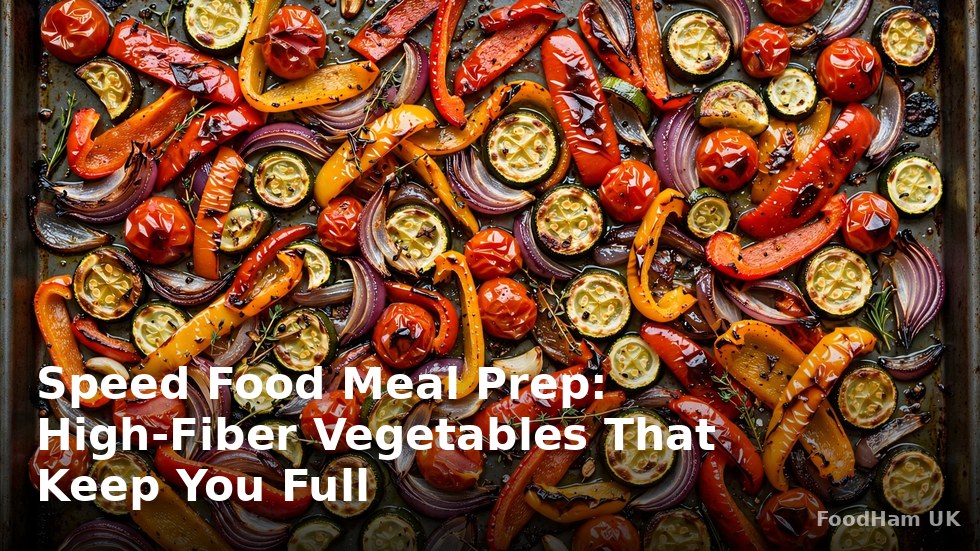
Speed Food Meal Prep: High-Fiber Vegetables That Keep You Full
Low-Calorie Doner Kebab Meat Hack Using Lean Beef Mince