Sainsbury’s Hubbards Food Hacks: Ultra-Cheap High-Protein Prep
Every UK supermarket has a value tier, and Sainsbury’s answer is the Hubbards range — plain packaging, sharp prices, and, if you know where to look, some of the cheapest protein per pound on the high street. These sainsburys budget meal prep hacks are about exactly that: ignoring the shiny branded middle aisles and building a high-protein prep week from the cheapest lines in the store, the ones most shoppers walk straight past.
To be clear, this isn’t an endorsement — prices and ranges change, and Aldi UK, Lidl, Tesco, Asda and Morrisons all have their own value lines worth comparing. But if Sainsbury’s is your local shop, the Hubbards range plus a few smart own-label picks can absolutely anchor a week of protein-rich meal prep without the premium price tag. Here’s how, hack by hack, with real recipes attached to each one.
Hack 1: The Hubbards Protein Audit — Know Your Cost Per 20g
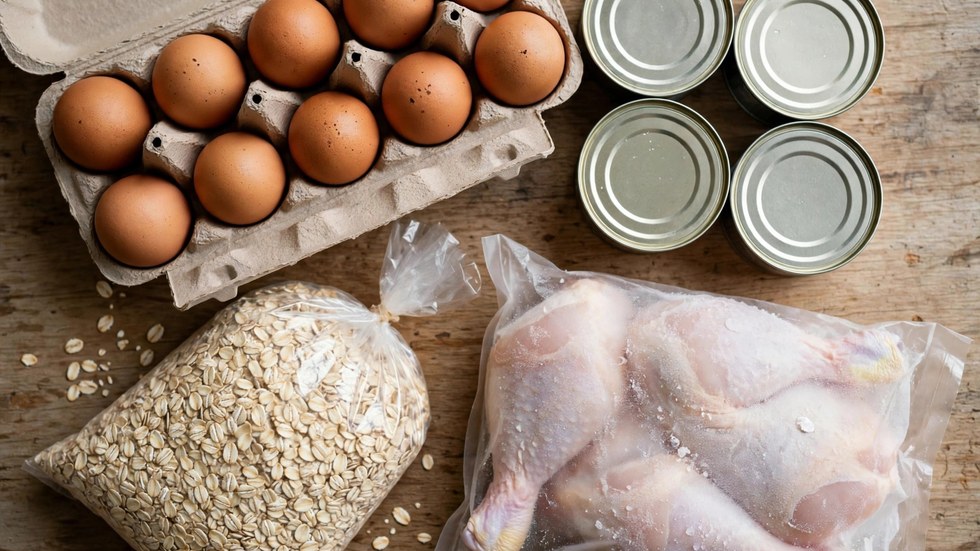
The single most useful habit in budget high-protein eating is thinking in cost per 20g of protein rather than cost per pack. A £3 pack of chicken breasts looks reasonable until you realise the £1.10 tin-heavy alternative delivers the same protein for half the money. Run this audit on your next shop:
| Hubbards / value protein | Typical price | Protein per pack | Cost per 20g protein |
|---|---|---|---|
| Value eggs (10 pack) | ~£1.05 | ~60g | ~£0.35 |
| Tinned tuna (4 pack) | ~£2.20 | ~100g | ~£0.44 |
| Frozen chicken breast (1kg) | ~£3.50 | ~230g | ~£0.30 |
| Dried red lentils (500g) | ~£0.75 | ~120g | ~£0.13 |
| Greek-style yoghurt (500g) | ~£0.85 | ~45g | ~£0.38 |
Lentils win by a mile, eggs and frozen chicken are the animal-protein value kings, and everything on this list beats fresh branded chicken breast (often £0.60+ per 20g) comfortably. Build your week around the top of this table and the protein takes care of itself.
UK Air Fryer & £1 Meal Prep Cost Estimator
Enter your costs in £ GBP and see per-portion cost, macros and air fryer energy savings.
Hack 2: Frozen Chicken Breast, Brined and Batch-Baked
Frozen chicken breast is the most underrated protein in the supermarket — often 30–40% cheaper than fresh per kilo, with identical nutrition. The reputation for dryness comes from cooking it badly, not from the freezing. The fix is a quick brine and a hot oven.
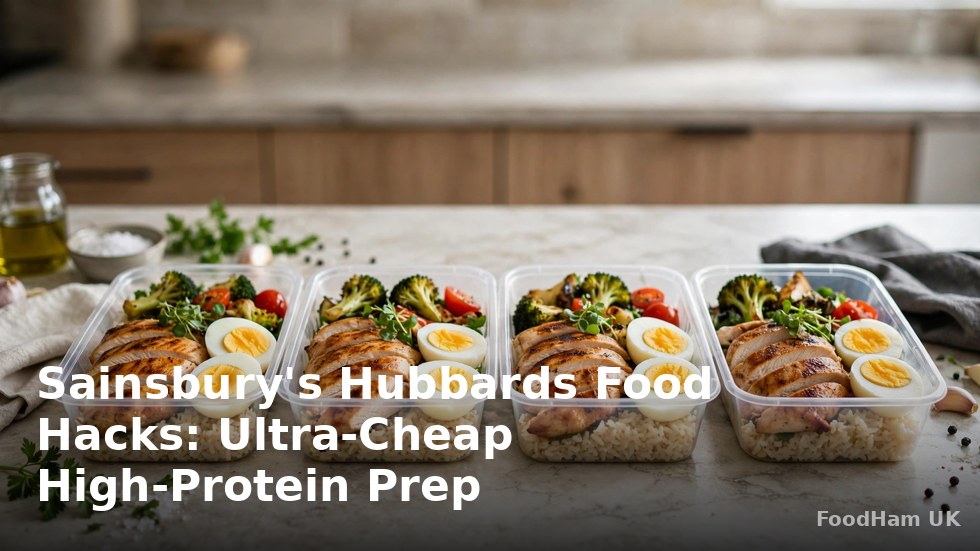
Recipe: Batch-Baked Brined Chicken (6 portions, ~75p each)
Ingredients: 1kg frozen chicken breasts (~£3.50), 2 tbsp salt, 1 tbsp sugar, 1 litre water, 1 tbsp oil, paprika, garlic powder, black pepper.
- Defrost safely. Move the chicken from freezer to fridge the night before. Never defrost at room temperature.
- Brine 30–60 minutes. Dissolve the salt and sugar in the water, submerge the breasts and refrigerate. This is the whole secret — brined chicken stays juicy even when batch-cooked.
- Season and bake. Pat dry, rub with oil and spices, and bake at 220°C for 20–25 minutes until the juices run clear and the thickest part reads 75°C on a food thermometer.
- Rest, slice, portion. Rest 10 minutes (non-negotiable — it redistributes the juices), then slice or dice into 6 containers. Refrigerate up to 3 days or freeze up to 3 months.
Six portions at roughly 75p each, each delivering around 35g of protein. Use them across salads, wraps, fried rice and pasta through the week. Reheat gently — 2 minutes in the microwave with a splash of water — because already-cooked chicken dries out if blasted.
Hack 3: The Egg Multiplier — Frittata Trays and Egg Muffins
At roughly 35p per 20g of protein, eggs are the cheapest complete animal protein in the store. The hack is cooking them in batch formats that reheat well, because a fried egg doesn’t meal-prep but a frittata absolutely does.
Recipe: Veg-Packed Frittata Tray (6 portions, ~45p each)
Ingredients: 10 eggs (~£1.05), 200g frozen peppers and onions (~£0.30), 100g frozen spinach (~£0.20), 60g value cheddar (~£0.35), oil, salt, pepper. Total ~£1.90.
- Heat the oven to 190°C. Soften the frozen veg in an ovenproof frying pan with a little oil for 5 minutes, letting the water cook off.
- Beat the eggs with salt, pepper and half the cheese. Pour over the veg, scatter the rest of the cheese on top.
- Bake 18–22 minutes until just set with a slight wobble in the centre — it firms up as it cools.
- Cool, slice into 6, and refrigerate. Keeps 3 days. Eat cold in wraps or reheated 90 seconds in the microwave.
Each slice: ~14g protein, ~45p. Two slices is a 28g-protein breakfast or lunch for under a pound. The same mixture baked in a muffin tin makes 12 egg muffins — even more portable.
Hack 4: Greek-Style Yoghurt as a Protein Ingredient, Not Just Breakfast
Value Greek-style yoghurt — around 85p for 500g — is about 9g protein per 100g, which makes it a legitimate cooking ingredient. Most people only eat it with granola, which wastes half its potential.
- Overnight protein oats: 50g oats + 150g yoghurt + a sliced banana, refrigerated overnight. ~18g protein, ~55p, zero morning effort.
- Yoghurt marinade: coat chicken pieces in yoghurt, lemon, garlic and spices for an hour before baking. Tenderises the meat and adds protein to the coating.
- Two-ingredient flatbreads: 200g self-raising flour + 200g yoghurt, kneaded and dry-fried. High-protein wraps for your batch chicken at ~12p each.
- Raita and dips: yoghurt + cucumber + mint stretches a curry and adds 10g protein to the meal for pennies.
Hack 5: The Lentil Stealth Boost
Dried red lentils at ~13p per 20g of protein are the cheapest protein in the entire supermarket — cheaper than any meat, fish, egg or dairy. The hack is that they disappear: simmered 20 minutes, red lentils dissolve completely into sauces, stews and curries, thickening them and adding protein and fibre without changing the flavour.
Recipe: Lentil-Boosted Bolognese (6 portions, ~70p each)
Ingredients: 250g value beef mince (~£1.75), 150g red lentils (~£0.22), 1 onion, 2 carrots, 2 tins chopped tomatoes (~£0.56), 2 cloves garlic, 1 tbsp tomato purée, Italian herbs, oil, salt, pepper. Total ~£4.10.
- Brown the mince in a large pot, breaking it up. Remove and set aside.
- Soften diced onion and carrot in the same pot 6–8 minutes. Add garlic, herbs and tomato purée; cook 1 minute.
- Return the mince, add the lentils, tinned tomatoes and 400ml water. Simmer 25–30 minutes until the lentils have dissolved and the sauce is thick.
- Serve over pasta or rice, or portion into 6 containers. Fridge 3–4 days, freezer 3 months.
The lentils stretch 250g of mince to feed six generously — without them you’d need 500g+ of mince for the same volume, nearly doubling the cost. Each portion carries ~22g protein and ~8g fibre. Nobody eating it will identify the lentils; they’ll just notice the sauce is thicker and more satisfying.
Putting the Week Together: A Sample £14 High-Protein Prep Week
| Day | Breakfast | Lunch | Dinner |
|---|---|---|---|
| Mon | Overnight protein oats | Chicken wrap (yoghurt flatbread) | Lentil bolognese + pasta |
| Tue | Frittata slices × 2 | Tuna & sweetcorn pasta | Chicken fried rice |
| Wed | Overnight protein oats | Lentil bolognese (leftover) | Chicken & veg traybake |
| Thu | Egg muffins × 3 | Chicken salad wrap | Tuna bean chilli + rice |
| Fri | Frittata slices × 2 | Egg fried rice | Leftover clear-out bowl |
Every day lands somewhere around 90–110g of protein without a single protein powder or premium product — just eggs, chicken, tuna, yoghurt and lentils from the value ranges. The total shop for this week, assuming basic spices and oil at home, comes to roughly £14.
Storage Rules for a High-Protein Prep Week
Protein-heavy preps follow the same safety rules as everything else, with one extra consideration: cooked chicken and egg dishes are the items to watch most carefully. Cool everything within 2 hours, keep the fridge at 4°C or below, eat chicken and egg preps within 3 days, and freeze anything scheduled for later in the week. Reheat until steaming throughout, and only reheat once. When in doubt, the freezer is your friend — a frozen portion is a safe portion.
Final Thoughts: Sainsburys Budget Meal Prep Hacks That Stick
The real lesson of these sainsburys budget meal prep hacks isn’t about one supermarket’s value range — it’s the audit habit. Once you start thinking in cost per 20g of protein, you stop overpaying for protein forever, wherever you shop. The Hubbards range just happens to be a convenient place to practise, with eggs, frozen chicken, tinned fish, yoghurt and lentils all sitting at the sharp end of the price spectrum. Learn the five hacks, run the numbers on your own shop, and high-protein eating stops being expensive. It was never the protein that cost the money — it was the packaging.
You May Also Like
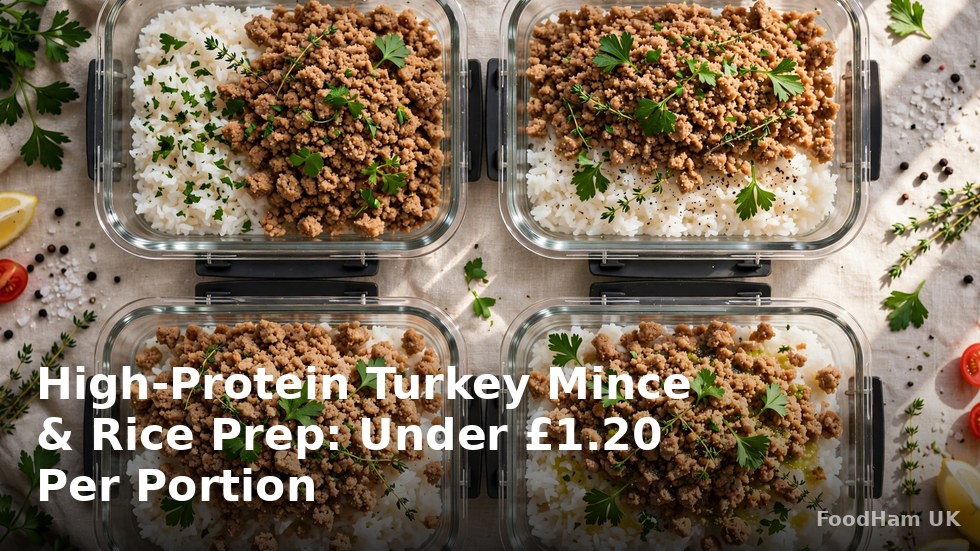
High-Protein Turkey Mince & Rice Prep: Under £1.20 Per Portion
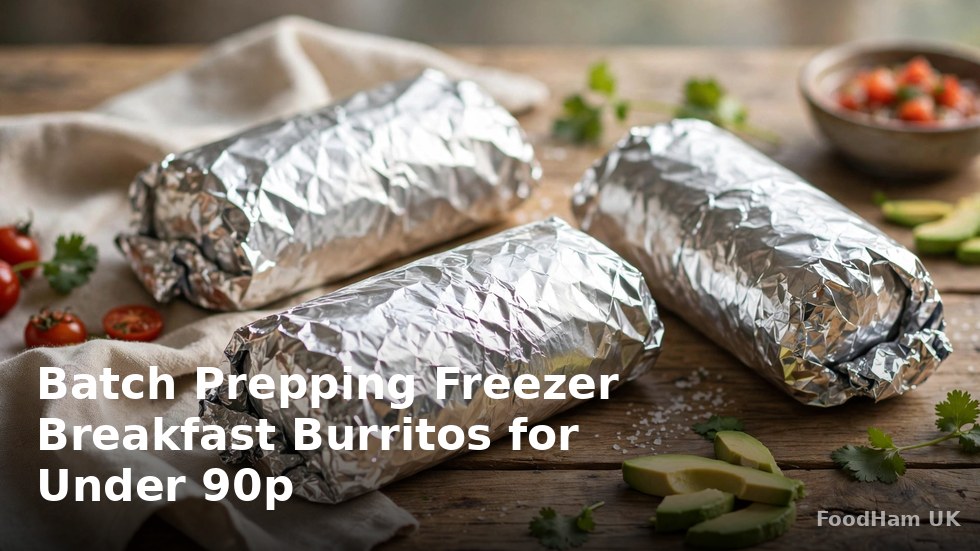
Batch Prepping Freezer Breakfast Burritos for Under 90p